

A ver
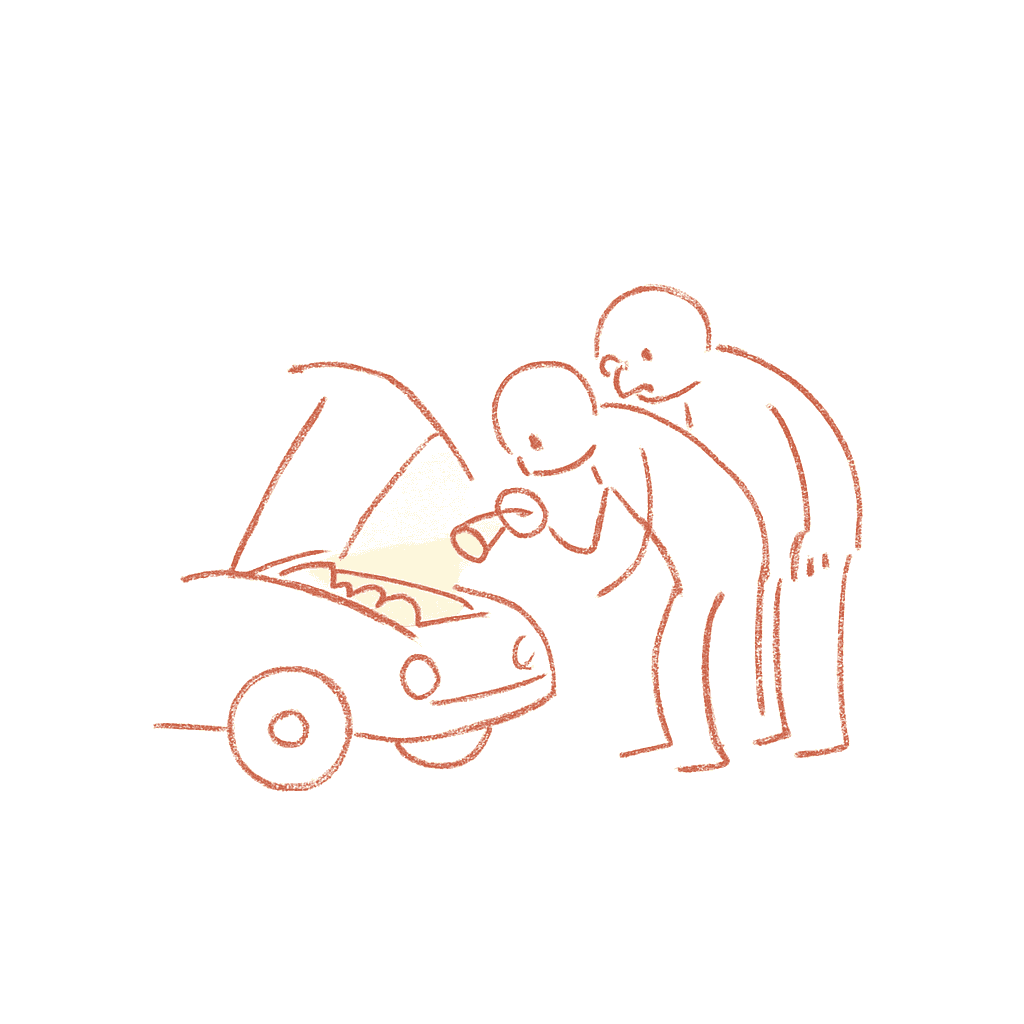
A ver means “let's see”. Spanish speakers say it before checking something, before thinking out loud, and to get attention: a ver, ¿dónde dejé las llaves? (“let's see, where did I leave my keys?”). Literally it's “to see”, from ver. It's neutral, used everywhere, and it sounds exactly like haber, which is a different word.

Where you'll hear it
Camila
¡Mira lo que encontré en el mercado!
Look what I found at the market!
Andrés
¿A ver? ¡Qué bonito!
Let me see! How pretty!
Listen: A ver

How it shows up
Not the A ver you were looking for?
A ver si + verb means “let's see if” or “hopefully”: a ver si nos vemos pronto (“hopefully we'll see each other soon”). ¿A ver? on its own means “let me see” or “show me”. Haber, which sounds the same, is a different verb: “to have” in compound tenses (debe haber llegado, “he must have arrived”).
Register and sound
Neutral. Works with friends, at work and with strangers. In writing it's just as normal, as long as you spell it a ver.
ah-BEHR, two syllables run together: “aber”. That's exactly why people mix it up with haber in writing.
🤷 Depende del País
A ver is neutral: you'll hear it in every country and every register, from kids to news anchors.
Latin America
Everywhere, every day: to check, to think out loud, to call a group to order.
Spain
Just as common, and often doubled when someone is about to explain: a ver, a ver…
Questions people ask
Is it a ver, aver, aber or haber?
A ver when you mean “let's see” (a + ver, “to see”), always two words. Aver and aber are just misspellings. Haber is a different verb: “to have” in compound tenses, or “there is” (hay). They all sound the same, which is why even native speakers mix them up in writing.
What does a ver si mean?
“Let's see if” or “hopefully”: a ver si llueve (“let's see if it rains”), a ver si nos vemos pronto (“hopefully we'll see each other soon”).
What does ¿a ver? mean on its own?
“Let me see” or “show me”: someone mentions a photo, you say ¿a ver? and hold out your hand.
Is a ver a filler word?
Often, yes. A ver… at the start of an answer buys a second to think, like “OK, so…” or “right…”.
