

Mijo
Mijo is mi hijo (“my son”) squeezed into one word; mija is the female form, from mi hija. Parents and grandparents say it to their kids, and older people, partners and friends use it as “sweetie” or “kid”. Usually warm, sometimes patronising. Heard across Latin America, most of all in Mexico and Colombia.
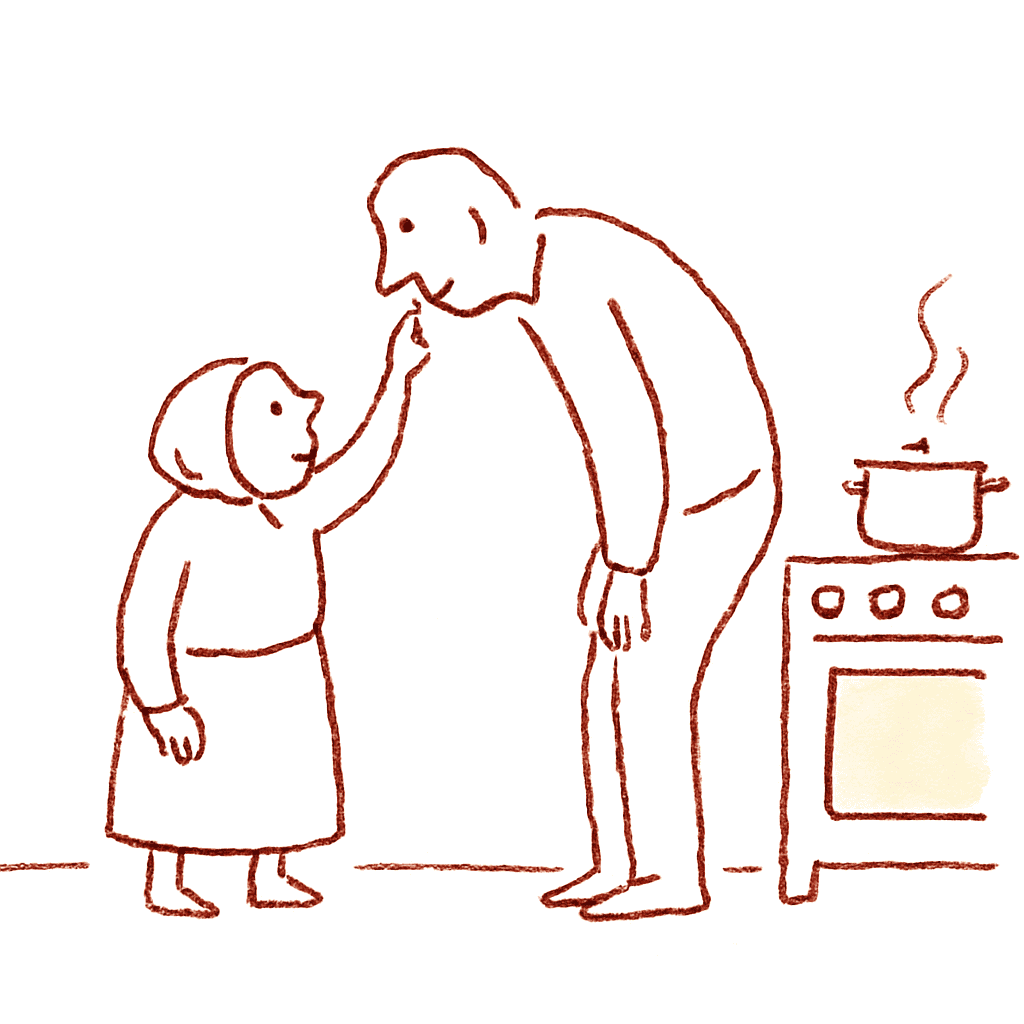

Where you'll hear it
Elena
Come más, mijo. Estás muy flaco.
Eat some more, sweetie. You're very skinny.
Andrés
Abuela, ya comí dos platos.
Grandma, I've already had two plates.

How it shows up
Not the Mijo you were looking for?
Mijito and mijita are the extra-soft versions, “my little son” and “my little daughter”. Mijo can also carry a warning: ay, mijo… from your aunt means you did something silly. You'll see it written m'ijo or mi'jo too; it's the same word.
Register and sound
Affectionate and informal. From an older person it's warm; from someone your age in an argument it can sound like “listen, kid”. Don't call a stranger mijo yourself.
MEE-hoh, stress on MEE. The j is a breathy h from the back of the throat. Mija: MEE-hah.
🤷 Depende del País
Mijo and mija are understood everywhere in Latin America. How often you hear them, and from whom, changes.
Mexico
Everyday from parents, grandparents and older people; mijito and mijita too.
Colombia
Very common, also between couples and friends. Said sharply, it's the start of a telling-off.
Central America
Common in family talk.
United States
Mexican-American families made mijo and mija familiar far beyond Spanish speakers.
Argentina
Less common. We tend to say hijo or hija in full.
Spain
Mostly hijo or hija in full, often with a sigh: ay, hijo (“oh, honestly”).
Questions people ask
What does mija mean?
The female form: mi hija, “my daughter”. Same uses as mijo: from parents, grandparents and older people, and sometimes between partners, as “sweetie” or “honey”.
Is mijo only for your own child?
No. Older people say it to any younger person, and some couples and friends use it with each other.
Can mijo be rude?
It can be. From an older relative it's love; from a peer in an argument it can sound condescending. Tone decides.
Is it mijo or m'ijo?
Both are around, plus mi'jo. Mijo is the most common spelling; they all say the same thing.
