

¿Qué onda?
¿Qué onda? means “what's up?”, the everyday casual greeting in Mexico, also heard in much of Central America. Literally it's “what wave?”, onda as in vibe. It's friendly, not rude, but too casual for your boss or an older stranger. The usual answer: nada, aquí, or bien, ¿y tú?
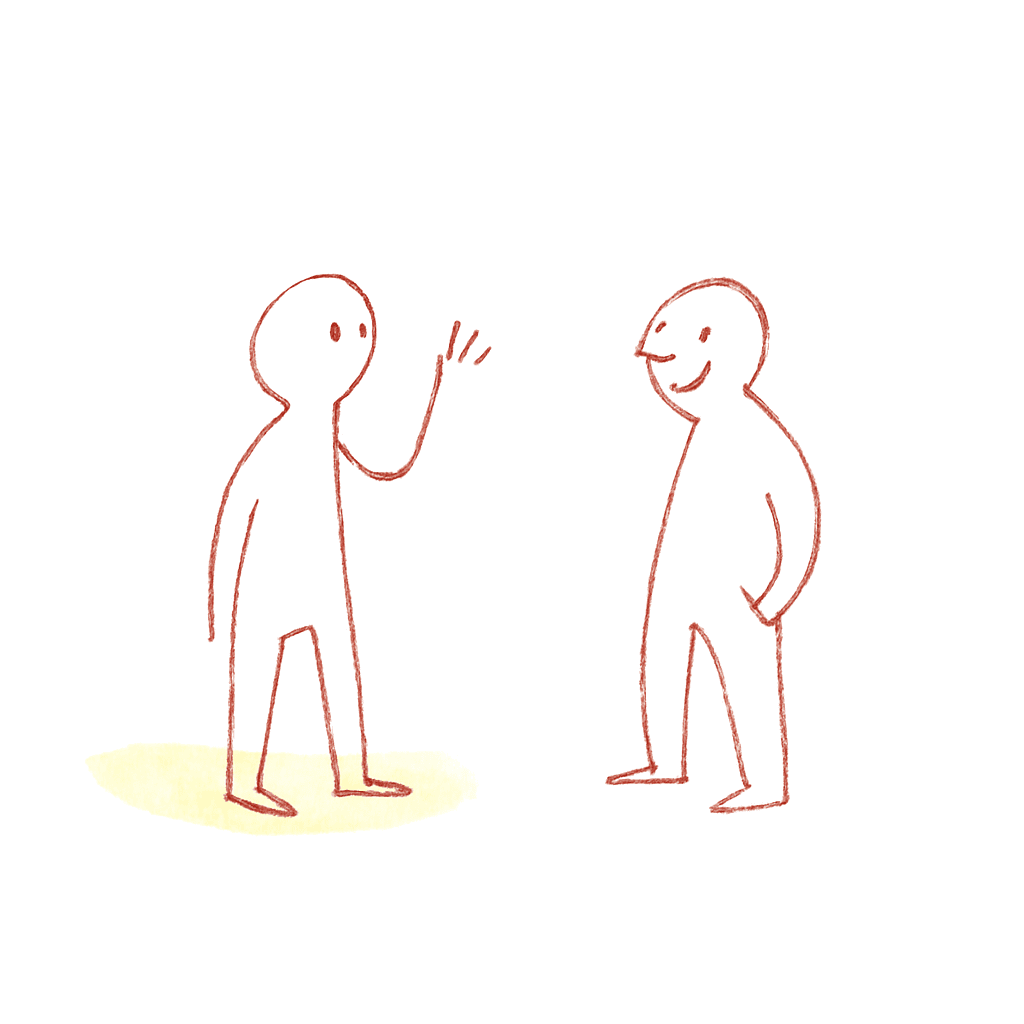

Where you'll hear it
Camila
¡Qué onda, Diego! ¿Cómo estás?
Hey Diego, what's up? How are you?
Diego
Nada, aquí, saliendo del trabajo. ¿Y tú?
Not much, just leaving work. You?
Camila
Bien, todo tranquilo.
Good, all quiet.
Listen: ¿Qué onda?

How it shows up
Not the ¿Qué onda? you were looking for?
¿Qué onda con…? asks “what's the deal with…?”, and ¿qué onda contigo? can mean “what's wrong with you?”. Onda on its own is the vibe: buena onda (“nice, good vibes”), mala onda (“not nice”). ¡Qué buena onda! means “how cool!” or “that's so nice of you!”.
Register and sound
Informal. Fine with friends, classmates and coworkers your age. With a boss, an older stranger or in a shop, use ¿qué tal? or ¿cómo está?
keh OHN-dah, stress on ON. Said fast it runs into one word: keh-ONdah.
🤷 Depende del País
¿Qué onda? is Mexico's greeting first, but it travels further than most Mexican slang.
Mexico
Everyday, with friends, classmates and coworkers your age.
Central America
Common in Guatemala, El Salvador and Honduras too, and understood across the region.
Chile
Used among friends as well.
Argentina
We say it too, but as a greeting ¿todo bien? is more Buenos Aires.
Colombia
Not the local greeting: Colombians say ¿qué más? or ¿quiubo?
Spain
Understood from Mexican TV, but Spaniards say ¿qué pasa? or ¿qué tal?
Questions people ask
How do you answer ¿qué onda?
Like “what's up?” in English: it's a greeting, not a real question. Nada, aquí (“not much”), todo bien (“all good”) or bien, ¿y tú? all work. Many people just say ¡qué onda! back.
What is the difference between qué onda and qué tal?
¿Qué tal? is neutral and used in every country, with almost anyone. ¿Qué onda? is casual and sounds Mexican or Central American. With friends in Mexico, qué onda; with your friend's grandmother, qué tal.
Is qué onda rude?
No. It's informal and friendly. It only sounds off when it's too casual for the situation, like greeting a client or an older stranger.
Where do people say qué onda?
Mostly Mexico, where it's the default casual greeting, and parts of Central America such as Guatemala, El Salvador and Honduras. You'll also hear it in Chile, Argentina, Uruguay and Paraguay. In Colombia, Spain and the Caribbean it's understood but not the local habit.
Is it qué onda or qué honda?
Qué onda, without an h. Onda is a wave or a vibe; honda means “deep” or “a slingshot”. The mix-up is common because the h is silent.
