

Best Way to Learn Conversational Spanish in 2026

Reviewed against our editorial standards
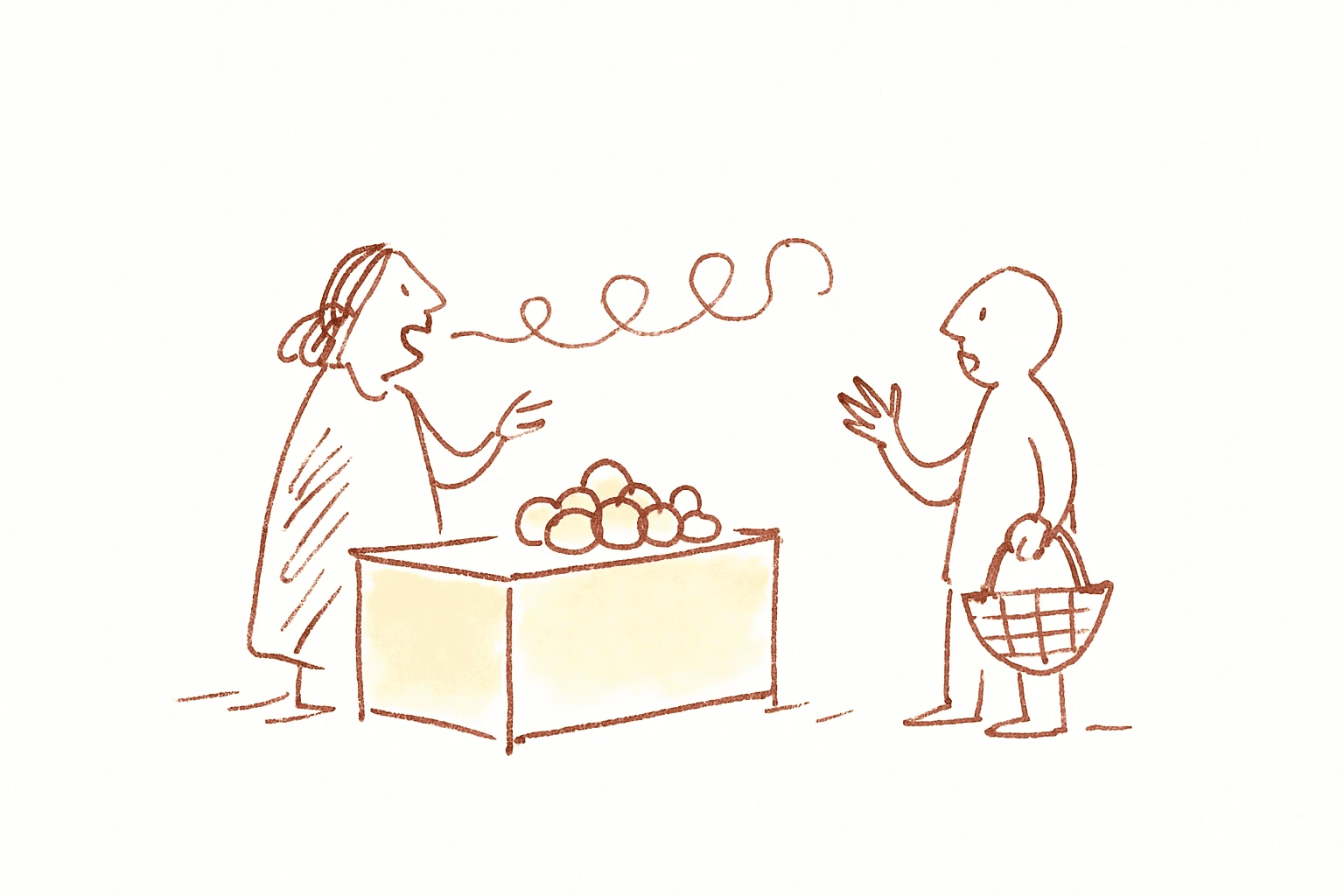
¡Hola! Alejandra here. A conversation has two halves: catching Spanish at the speed people really talk, and answering. Most methods only train the answer, which is why "I understand but can't speak" is the most common theme in the 30,000+ Reddit posts by Spanish learners we read. The best way to learn conversational Spanish in 2026 trains your ear first. My #1 method is real conversations on audio with a teacher's notes, which is how Spanish with Alejandra works. The four methods after it give you the other half: someone to answer.
Not sure of your level? Take the two-minute Spanish level test before you pick a method.
Key Takeaways
- The best way to learn conversational Spanish in 2026 starts with understanding. You can't answer what you didn't catch, and a real conversation has no replay button. Training your ear on fast, everyday Spanish is the half most methods skip.
- Real conversations on audio, with a teacher's notes, rank #1, and Spanish with Alejandra is built on that method. You get dialogues written the way people talk, at native speed and in 🐢 Despacito slow audio, with the transcript and notes. It costs $240 a year, 30% off right now, with a 7-day free trial.
- An immersion stay is the most intense option. At one school in Oaxaca, Mexico, two weeks of a 20-hour-a-week course cost USD 460, and a homestay room adds USD 32 a night, before flights. Go with your ear already trained, or you'll spend the first week nodding.
- Shadowing and language exchange cost nothing. Shadowing gets your mouth up to native speed, and an exchange puts you in front of a real Spanish speaker. Both work best once you can follow some spoken Spanish.
- A weekly tutor is the most reliable source of speaking minutes, at a price. You book the time, you talk, someone corrects you. Spanish tutors on one large platform charge $4 to $60 an hour, so a year of weekly lessons runs from about $200 to $3,100.
What conversational Spanish actually is (and what it is not)
Conversational Spanish is the Spanish of two or more people talking in real time: over lunch, at a market stall, on the phone with a landlord. The Council of Europe's language framework, the CEFR, treats this as its own skill. Its 2020 Companion Volume separates reception (listening and reading), production (speaking or writing on your own) and interaction, where you do both at once, plus mediation. Conversation is interaction, which is why it feels harder than either half alone.
It also sounds different from your textbook. Sounds get dropped (para becomes pa', cansado becomes cansao), words run together, and every gap fills up with este…, o sea, bueno and pues. My guide to Spanish filler words covers the ones you'll hear most. None of it is sloppy; it is simply how Spanish is spoken.
Conversational Spanish is not a phrasebook. Memorised lines get you a coffee, then collapse at the first unexpected answer. It isn't fluency in the grand sense either: you can hold a good conversation at B1 with a modest vocabulary, if you understand what's said to you and can keep it going.
And it isn't something an app teaches well. Apps are good for daily vocabulary and weak at fast speech and live replies. Looking for apps or tutors to compare? Our sister directory lists them at bestlanguageapps.com/spanish.
How We Ranked These Methods
Six criteria, each scored 0, 1 or 2 by a fixed rule and weighted, so every score is out of 100. Understanding native-speed Spanish weighs most, because you can't answer what you didn't catch; speaking minutes come second.
- Native-speed everyday Spanish (25%). 2 = all or most of what you hear is everyday Spanish at native speed; 1 = it depends on your material or your partner; 0 = mostly slowed down or adjusted for learners.
- Speaking minutes per week (20%). 2 = 30 or more minutes of you speaking Spanish in a normal week; 1 = some, but under 30 (reading aloud, short turns); 0 = none.
- Corrections (10%). 2 = a teacher corrects your spoken Spanish; 1 = answer keys, tests or a partner's informal corrections; 0 = none.
- Cost (15%). 2 = $300 or less for a year of weekly use (or for one stay); 1 = $301 to $1,000; 0 = more than $1,000. A price range is scored at its midpoint.
- Works from home, on your schedule (15%). 2 = from home, any time, no one else needed; 1 = from home, but at a booked time or when a partner is free; 0 = you have to travel.
- Level to start (15%). 2 = from A2, or at any level; 1 = from about B1; 0 = from B2 or higher.
Prices were checked on each provider's own site on 14 October 2026. Ties break on criterion 1, then 2. No method wins on all six.
The Best Ways to Learn Conversational Spanish in 2026
Five methods made the list, and they are deliberately different. The first trains the half most learners neglect: understanding fast, everyday Spanish. The next four give you speaking time, alone or with other people. Most learners who get good at conversation combine the first with one of the others.
1. Real conversations on audio with a teacher's notes, best for understanding fast, everyday Spanish so you can answer
Score: 85/100 · The program for it: Spanish with Alejandra
Listening to real conversations with a teacher's notes is the best way to train the half of conversation most learners skip: understanding Spanish at full speed.
This is the method I teach, and Spanish with Alejandra is built around it. You listen to a dialogue between two people, written the way people really talk, with the fillers, the dropped sounds and the half-finished sentences. Then you read the notes on what each phrase means and when people use it, listen again without the transcript, and say the lines out loud.
Why it ranks first: learners who freeze are rarely short of words. "Native Spanish speakers talk so fast I freeze," as one r/Spanish post put it.
Listen: ¿A qué te dedicas?
What you get: the free tier is a new dialogue every week. The 💎 Premium Program adds 💬 2 Full Lessons a week: native-speed and 🐢 Despacito slow audio, the full transcript and translation, annotated vocab notes, 🎯 Two Exercises and a writing prompt, plus the 🌡️ Monthly Level Test, 📚 The Lesson Library and 🧡 The Private Podcast. The Spanish uses tú, not vos.
Against the criteria: speaking minutes are low unless you read the lines aloud, which I recommend, about ten minutes after each lesson. Cost: $240 a year or $24 a month (checked 14 Oct 2026), 30% off the yearly plan right now, with a 7-day free trial and a 30-day money-back guarantee. Needs another person: no. Level: A2 and up. The limit: nobody answers back, so pair it with a method below.
Best suited for: learners from A2 through intermediate who read better than they listen and lose the thread when people talk to each other. If "they talk too fast" is your problem, start here.
2. An immersion stay in Latin America, best for a short, intense burst when you can travel
Score: 77.5/100 · The program for it: a language school with a homestay
An immersion stay puts classes and daily life in Spanish together, which makes it the most intense way to practise conversation, if you can travel.
The numbers, from one school's price list: Instituto Cultural Oaxaca, in Oaxaca, Mexico, charges USD 460 for two weeks of its 20-hour program and USD 520 for two weeks of its full immersion program, with a USD 55 deposit to register (checked 14 Oct 2026). Classes have at most six students, occasionally eight in high season, and new groups start every Monday. A homestay room with breakfast is USD 32 a night, so two weeks of classes and a room come to about USD 900 before flights.
Against the criteria: 20 hours of class a week, a teacher correcting you, and every conversation you start outside, all at full speed. Works from home: no. Level: any, as long as the school has a class at your level.
The limit is the one learners on Reddit keep describing: you arrive, people talk at full speed, you hesitate, and they switch to English. One r/Spanish thread asking why some Latinos refuse to speak Spanish to learners drew 230 comments. A stay works far better after months of training your ear on native-speed dialogue, and without a weekly routine afterwards, the gains fade.
Best suited for: learners who can take a week or two off and want a concentrated push before a move, a trip or an exam. Treat it as the finish line of a routine, not the start.
3. Shadowing native audio, best for getting your mouth up to speed on your own
Score: 77.5/100 · The program for it: any dialogue with a transcript
Shadowing, speaking along with native audio a split second behind, is the cheapest way to make spoken Spanish physically easier to produce.
You play a short piece of Spanish audio and speak along with it, copying the rhythm, the linking and the melody, not just the words. There is evidence it helps the listening half too. A 2016 study by Yo Hamada in Language Teaching Research found that shadowing improved Japanese university students' perception of English sounds, and that the less proficient listeners gained the most. When your mouth knows the shape of pa' que, your ear catches it faster.
- Pick 30 to 60 seconds of a dialogue with a transcript.
- Listen twice while reading the transcript.
- Shadow it with the transcript, then without, three or four times.
- Record yourself once and compare.
Where to get the audio: my free Spanish dialogues are a start. Hoy Hablamos, a daily podcast from Spain, adds a transcript to every episode with its Premium plan at $95 a year (checked 14 Oct 2026); its Spanish is Spain's, not Latin America's.
Against the criteria: 10 minutes a day is 70 speaking minutes a week, more than a weekly tutor lesson. Cost: $0 with audio you already have. Real spoken Spanish: depends on your audio, so shadow dialogues, not narration, or you'll sound like a newsreader at a barbecue. Needs another person: no. Level: from about A2. The limit: you're copying, not building your own sentences, and nobody corrects you.
Best suited for: self-directed learners who want speaking practice every day without booking anyone. It also makes a good warm-up before a tutor session or an exchange.
4. Language exchange, best for free practice with native speakers
Score: 70/100 · The program for it: free exchange evenings, or a partner online
A language exchange is the cheapest way to talk with native Spanish speakers: you help them with your language, and they help you with Spanish.
It happens online, with partners from exchange apps (the directory linked above compares them), and in person, at exchange evenings in bars. The best known are Mundo Lingo's: they started in Buenos Aires in 2011, now run in 30+ cities on five continents, and are free to attend, with no tickets and no entrance fee (checked 14 Oct 2026).
This is Spanish as it's really spoken, by someone who isn't paid to slow down. That is the value and the difficulty: if you can't follow fast, everyday Spanish yet, you'll spend the Spanish half nodding.
Against the criteria: an hour split evenly gives you about 30 minutes of Spanish, and fewer speaking minutes, because you listen too. Cost: free online and at Mundo Lingo; your drinks are on you. Real spoken Spanish: most of it. Needs another person: yes, and not a teacher, so corrections depend on your partner's patience. Level: about B1, when you can keep a simple exchange going.
How to make it work: agree on the split, bring three prepared topics, and write down every phrase you had to ask about. My Spanish conversation questions give you thirty to start with. The limit: half the time is in your language, and partners drift away.
Best suited for: intermediate learners on a budget who want real conversation with native speakers, and anyone hoping to make Spanish-speaking friends. It works best once your ear can keep up.
5. Weekly conversation sessions with a tutor, best for guaranteed speaking time with corrections
Score: 52.5/100 · The program for it: a tutor you book every week
A weekly session with a tutor is the most reliable way to get speaking minutes, because you book the time and someone corrects you as you go.
A tutor is the simplest answer to "I never get to speak". Online platforms have made it affordable as a weekly habit, at every level, and the directory linked above compares them.
The numbers: on one of the large platforms, 2,353 Spanish tutors were available, charging $4 to $60 an hour (checked 14 Oct 2026). At one lesson a week, that is about $200 to $3,100 a year, depending on whom you pick; the midpoint, about $1,660, is why it scores 0 on cost here. Tutors there also offer trial lessons, so test a few.
Against the criteria: up to 50 speaking minutes a week, if the tutor lets you do most of the talking. Corrections: yes, from a teacher. Real spoken Spanish: some. Tutors slow down and articulate for learners, which is kind, and is also why a family lunch still feels fast after a year of lessons. Needs another person: yes, but booked, so it happens. Level: any.
How to get more from it: send your tutor a dialogue you studied and ask for the last ten minutes at normal speed, fillers included. The limit: one hour a week, in one voice adjusted for you, won't train your ear.
Best suited for: learners at any level who understand more than they can say and need regular, corrected speaking practice. It is also the best start for day-one beginners.
Side-by-Side Comparison
Three of the ranking criteria at a glance, plus the cost (checked 14 October 2026); the scores and the other criteria are under each method above.
| Method | Native-speed everyday Spanish | 30+ speaking minutes a week | From home, on your schedule | Cost |
|---|---|---|---|---|
| Spanish with Alejandra (audio + notes) | ✓ | – | ✓ | $240 / year |
| Immersion stay | ✓ | ✓ | – | ~$900 for 2 weeks + flights |
| Shadowing | – | ✓ | ✓ | $0 |
| Language exchange | ✓ | – | – | $0 |
| Weekly tutor sessions | – | ✓ | – | ~$200–$3,100 |
Which method fits your goal
| If you… | Pick | Why |
|---|---|---|
| understand textbook Spanish, but native speakers are too fast | Spanish with Alejandra | Native-speed dialogues with notes train the exact speech that loses you |
| finished an app course and know the basics (A2) | Spanish with Alejandra | 🐢 Despacito slow audio, transcripts and translations make real dialogues workable at A2 |
| are going to Latin America in three months | Spanish with Alejandra + shadowing | Train your ear on everyday dialogues, then shadow the lines 10 minutes a day until they come easily |
| understand quite a lot but freeze when you have to answer | A weekly tutor session | Booked speaking minutes, with someone correcting you |
| have no budget | Shadowing + language exchange | Both cost nothing; one trains your mouth, the other gives you a real partner |
| can take two weeks off | An immersion stay | Twenty hours of class a week, plus daily life in Spanish |
| are a complete beginner | A weekly tutor session | Someone patient to build the basics with, at A1 |
Wondering whether to learn Latin American or Spain Spanish first? Spain vs Latin American Spanish sets out the real differences. For the hours involved, see how long it takes to learn Spanish. For a routine you can start this week, see Spanish conversation practice and basic Spanish conversation.
What you get in your first month
Here is exactly what a month of Spanish with Alejandra contains, counted from the lesson plan.
At two lessons a week, that is about eight lessons: eight conversations at native speed and in 🐢 Despacito, each with a transcript and notes; 16 exercises with answers; eight writing prompts; and one 🌡️ Monthly Level Test. The first lesson's audio episode runs 2 minutes 49 seconds, so expect about three minutes of conversation per lesson, played as many times as you like. For more listening between lessons, see Spanish listening practice.
The map of how it all fits together, and which free lessons to start with, is on the Start Here page.
FAQ
What is the best way to learn conversational Spanish?
Train both halves, ear first: real conversations at native speed, because you can't answer what you didn't catch. Then add speaking minutes with shadowing, a language exchange or a tutor. For the listening half, our #1 is Spanish with Alejandra.
How long does it take to hold a conversation in Spanish?
It depends on your starting level and your weekly hours, so be wary of anyone promising a date. From B1, with native-speed listening several times a week and regular speaking practice, the aim is months, not years.
How can I practise speaking Spanish on my own?
Shadow short dialogues with a transcript, read lesson lines aloud, and record yourself once a week. Ten minutes a day gives you more speaking time than a weekly lesson.
What should I do when native speakers talk too fast?
Learn the sounds of fast speech before you need them, such as pa' for para and fillers like o sea and este. In the moment, ¿Me lo repites, por favor? ("Can you say that again, please?") is perfectly normal.
How do I learn conversational Spanish for travel?
Start two or three months before you go. Listen to everyday dialogues set in cafés, shops and stations, and shadow the lines you're likely to need.
What kind of Spanish should I learn for conversation: Latin American or Spain?
The one you'll hear most. We teach Spanish understood everywhere, with tú, not vos; the differences from Spain are smaller than Reddit makes them sound.
What level do I need to start Spanish with Alejandra?
A2 and up: you're past the very first basics, and the lessons carry you all the way through intermediate. 🐢 Despacito slow audio, transcripts and translations make them work at A2; native-speed audio stretches B1 to C1.
Try Spanish with Alejandra free for 7 days
If people talking fast is what stops you answering, this is the method I built for you. Every lesson is a conversation at native speed, with a 🐢 Despacito slow version, a transcript and notes on what people actually mean. Two full lessons arrive each week, and the library is open from day one. Paid plans carry a 30-day money-back guarantee.
When you're ready, start your 7-day free trial. If you'd rather begin with something free, take the two-minute Spanish level test and see exactly where your ear stands today.
From the team behind French with Amélie: 33,000+ learners.