

Free Spanish Dialogues: 6 Everyday Conversations

Reviewed against editorial standards
¡Hola! Alejandra here, Spanish teacher from Buenos Aires.
The short answer
Here are six free Spanish dialogues, from A2 to B2, written the way people actually talk in Latin America: with interruptions, fillers and the small phrases textbooks leave out. Each one has the English under every line and one thing to notice. Read them aloud, then read them again faster. That’s the whole method.
Most “Spanish dialogues” online are textbook scenes where everyone speaks in full sentences and nobody says pues. Real conversation is messier, and your ears need the mess.
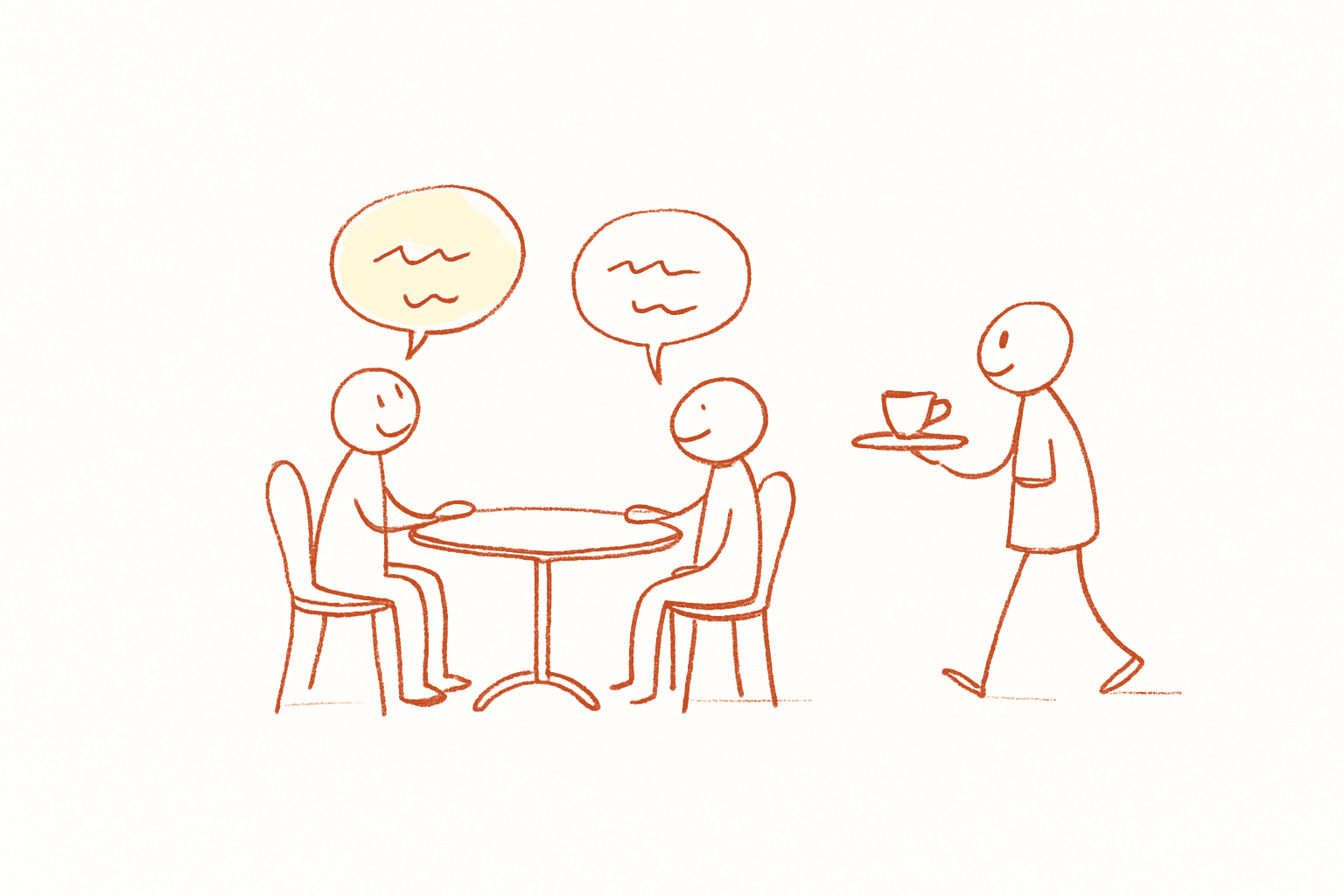
🌱 A2: Ordering at a café
The customer uses usted (the polite “you”) with the waiter, which is normal with strangers who serve you.
Mesero: Buenas tardes. ¿Qué le traigo? Good afternoon. What can I get you?
Lucía: Buenas tardes. Un café con leche, por favor. Y… ¿tiene algo dulce? Good afternoon. A coffee with milk, please. And… do you have anything sweet?
Mesero: Sí, tenemos pan dulce y pastel de chocolate. Yes, we have sweet bread and chocolate cake.
Lucía: Mmm… el pastel, por favor. Mmm… the cake, please.
Mesero: Perfecto. ¿Algo más? Perfect. Anything else?
Lucía: No, gracias. Bueno, sí: un vaso de agua. No, thanks. Well, yes: a glass of water.
Notice: ¿Qué le traigo? literally means “What do I bring you?”. It’s the most common way a waiter asks for your order.
🌱 A2: Asking the way
Mateo: Disculpa, ¿sabes dónde está la estación de metro? Excuse me, do you know where the metro station is?
Camila: Sí, claro. Sigues derecho dos cuadras y después doblas a la derecha. Yes, of course. Go straight two blocks and then turn right.
Mateo: ¿Dos cuadras? ¿Está cerca, entonces? Two blocks? It’s close, then?
Camila: Sí, a cinco minutos caminando. No tiene pierde. Yes, five minutes on foot. You can’t miss it.
Mateo: ¡Muchas gracias! Thanks a lot!
Camila: De nada. ¡Que te vaya bien! You’re welcome. Have a good one!
Notice: derecho (“straight on”) and a la derecha (“to the right”) sound almost the same. Every learner mixes them up once. Usually in a taxi.
🌿 B1: Making weekend plans
Sofía: Oye, ¿qué vas a hacer el sábado? Hey, what are you doing on Saturday?
Diego: Nada todavía. ¿Por qué? ¿Tienes algún plan? Nothing yet. Why? Do you have a plan?
Sofía: Pensaba ir a la playa con mi hermana. ¿Te animas? I was thinking of going to the beach with my sister. Are you up for it?
Diego: Me encantaría, pero el domingo trabajo temprano. I’d love to, but I work early on Sunday.
Sofía: No pasa nada, volvemos el sábado en la noche. No worries, we’ll come back Saturday night.
Diego: Entonces sí. ¡Vámonos! Then yes. Let’s go!
Notice: ¿Te animas? is the friendly “are you in?”. And no pasa nada (“no worries”) and vámonos (“let’s go”) are two of the most useful phrases in the language.
🌿 B1: A coworker is late
Andrés: ¡Por fin llegas! La reunión empezó hace diez minutos. Finally! The meeting started ten minutes ago.
Valentina: Ya sé, ya sé. Había un tráfico horrible. I know, I know. The traffic was awful.
Andrés: Bueno, tranquila. El jefe tampoco llegó todavía. Well, relax. The boss isn’t here yet either.
Valentina: ¿En serio? ¡Qué suerte! Seriously? What luck!
Andrés: Pues sí. Siéntate rápido y haz como si nada. Yep. Sit down quick and act like nothing happened.
Notice: two fillers doing real work. Bueno here means “well, OK” (not “good”), and pues sí is a shrugging “yep”. I explain both in Spanish filler words.
🌳 B1+: Dinner with the family
Mamá: ¿Y? ¿Qué tal el trabajo nuevo? So? How’s the new job?
Javier: Bien, bien. O sea, la gente es muy simpática, pero hay muchísimo trabajo. Good, good. I mean, the people are really nice, but there’s loads of work.
Mamá: Bueno, es normal al principio. ¿Y te pagan bien, por lo menos? Well, that’s normal at first. And do they pay you well, at least?
Javier: Mamá… no vamos a hablar de dinero en la cena. Mom… we’re not talking about money at dinner.
Mamá: ¡Ay, perdón! Entonces cuéntame de tu novia. Oh, sorry! Then tell me about your girlfriend.
Javier: ¿Me pasas el pan, por favor? Can you pass me the bread, please?
Notice: ¿Qué tal…? followed by a noun means “how’s the…?” or “how was the…?”. And o sea (“I mean”) softens what comes next.
🌳 B2: Returning something that broke
Clienta: Buenos días. Compré esta licuadora la semana pasada y ya no funciona. Good morning. I bought this blender last week and it already doesn’t work.
Vendedor: Uy, lo siento. ¿Tiene el recibo? Oh, I’m sorry. Do you have the receipt?
Clienta: Sí, aquí está. La usé dos veces y empezó a oler a quemado. Yes, here it is. I used it twice and it started to smell burnt.
Vendedor: Entiendo. Le puedo dar otra igual o devolverle el dinero, como prefiera. I understand. I can give you another one the same or refund your money, whichever you prefer.
Clienta: Prefiero el dinero, la verdad. No quiero arriesgarme otra vez. I’d rather have the money, honestly. I don’t want to risk it again.
Vendedor: Me parece justo. Deme un momento. That seems fair. Give me a moment.
Notice: como prefiera (“whichever you prefer”) uses the subjunctive, the way people really offer choices politely. And la verdad at the end of a sentence means “honestly”.
How to study a Spanish dialogue in 15 minutes
- Read it with the English once, slowly. Understand every line.
- Cover the English and read the Spanish aloud. Stop at anything you can’t say.
- Read it aloud again, faster. Link the words: ¿Qué es eso? becomes one sound in real speech.
- Pick one phrase to steal. Just one. Use it today, in a message or out loud to your cat.
- Come back tomorrow and read it once more. Repetition is the point.
When you can follow written dialogues easily, move to audio. My Spanish podcasts by level list sorts the best shows by level and by accent.
Want one of these every week?
I write a new real conversation every week, in neutral Latin American Spanish, with my notes on the phrases your app skipped. Get the free weekly conversation, and find out where your ears stand first with the free Spanish level test.
FAQ
Where can I find free Spanish dialogues?
Right here: the six above cover A2 to B2. For more, a free weekly conversation by email, learner podcasts such as the Duolingo Spanish Podcast, and native audio once you reach B2.
Are these dialogues in Latin American or Spain Spanish?
Neutral Latin American Spanish, with tú and ustedes. You can use every line from Mexico to Argentina. In Spain, people would say a few things differently, such as el camarero instead of el mesero for the waiter.
What level are these dialogues?
Two A2, two B1, one B1+ and one B2, in that order. If the first one feels easy, skip ahead. If the last one feels impossible, that’s fine: come back to it in a month.
How do I practise speaking with a dialogue?
Read one part aloud and cover the other, then swap. Better still, record yourself reading both parts and listen back. It’s uncomfortable and it works.
With a partner or a tutor, act the scene out and keep its social rules: the waiter uses usted, friends argue about who pays, and nobody turns down an invitation with a flat no. People soften it: Uy, no puedo, es que tengo un compromiso (“Oh, I can’t, I’ve got something on”). Ask your partner to stop you when the Spanish is right but the situation is wrong.
Do these dialogues have audio?
Not these six: they’re text only, on purpose. Reading them aloud yourself trains your mouth and your ear at the same time. When you’re ready for audio with a full transcript, try Radio Ambulante from B1+ and the other shows in my podcasts by level.
Are scripted dialogues enough?
No, and they aren’t meant to be. A written dialogue gives you the phrases and the order people say them in, slowly enough to learn them. Unscripted speech adds speed, overlap and half sentences. You need both: scripted first, to learn the pieces, then unscripted, to hear them at full speed. Hours of TV won’t teach you to order a coffee if you’ve never practised the lines.
How do I make a Spanish dialogue sound more casual?
Three small changes. Drop the subject: ¿Vienes? (“Are you coming?”), not ¿Tú vienes?. Start with a filler: Bueno, Oye, Pues. And shorten: ¿Nos vemos a las ocho? (“See you at eight?”) instead of ¿Quieres que nos veamos a las ocho? (“Do you want us to meet at eight?”). Then check tú and usted: friends use tú.
What is Spanish with Alejandra?
Finally understand real spoken Spanish, with a teacher in it with you.
- 💬 2 Full Lessons a week, with Alejandra's annotated vocab notes
- Every dialogue at native speed, 🐢 Despacito and ⚡ A Toda Velocidad
- 🧡 The Private Podcast, in your podcast app
- 📚 The Lesson Library: every lesson is yours from day one
- 🌡️ Monthly Level Test that tracks your climb
- A real teacher: Alejandra writes every dialogue herself