

Spanish Conversation Practice: With or Without a Partner
Reviewed against our editorial standards
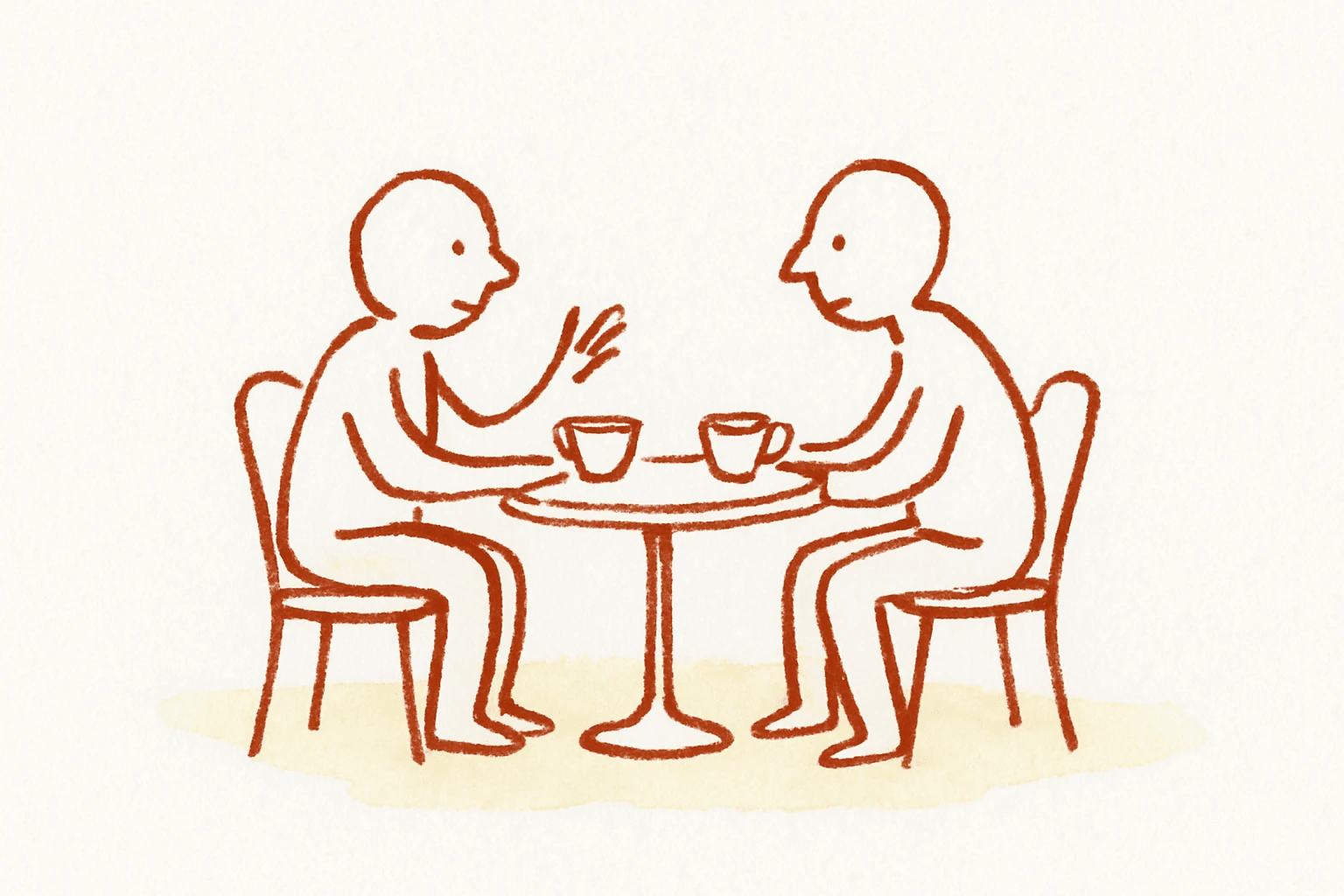
¡Hola! Alejandra here, Spanish teacher from Buenos Aires.
The short answer
You practise Spanish conversation in three places: alone every day, with a partner once or twice a week, and with a tutor if you want correction. Alone, you shadow dialogues, narrate your day and rehearse the five conversations you’ll actually have. With people, you use what you rehearsed. Most learners skip the first part, which is why they freeze in the second.
Speaking also rests on listening: you can’t answer what you didn’t catch. If real-speed Spanish still runs together for you, start with Spanish listening practice. The free Spanish level test shows where your ears are in two minutes.
Why can you understand Spanish but not speak it?
Because reading and speaking use different muscles. When you read, the words are in front of you. When you speak, you have to find them, in order, in real time, while someone waits. That’s a separate skill, and it only grows by doing it.
The fix isn’t more grammar. It’s ready-made pieces: whole phrases you can say without building them. ¿Puedes repetir, por favor? (“Can you repeat, please?”), bueno, a ver… (“well, let’s see…”), la verdad, no sé (“honestly, I don’t know”). Native speakers talk in these chunks. Learners who freeze are usually building every sentence from single words.
How to practise speaking Spanish alone
Twenty minutes a day alone does more than one hour a week with a partner. Here’s what to do with them.
1. Shadow a short recording
Play a sentence, pause, and say it back with the same rhythm. Then try speaking along with the audio, a beat behind. Don’t chase perfect sounds; copy the music first. Here’s one to start with, from my free level test:
Mucha gente quiere trabajar desde casa, pero para mí es muy difícil. En la oficina trabajo bien. En casa me siento con la computadora a las nueve, y de repente son las doce. Sigo en pijama, solo contesté tres correos y le di de comer al gato. Por eso ahora voy a la oficina tres días a la semana. Lots of people want to work from home, but for me it’s really hard. At the office I work well. At home I sit down at the computer at nine, and suddenly it’s twelve. I’m still in my pyjamas, I’ve only answered three emails and fed the cat. That’s why I now go to the office three days a week.
For more material at A2, my free Spanish dialogues give you two voices to copy.
2. Narrate what you’re doing
Say it out loud while you do it: Ahora voy a hacer café. ¿Dónde están las llaves? Uy, se me hizo tarde. (“Now I’m going to make coffee. Where are the keys? Oops, I’m running late.”) When you hit a word you don’t know, say it another way and look it up later. That “say it another way” is the real skill.
3. Tell a one-minute story every evening
What did you do today? Hoy me levanté a las siete, fui a trabajar en autobús y en la tarde llamé a mi hermana. (“Today I got up at seven, went to work by bus and in the afternoon called my sister.”) One minute, past tense, out loud. It’s the most useful drill I know for the preterite.
4. Rehearse the conversations you’ll actually have
You’ll be asked the same things again and again: where you’re from, what you do, why you’re learning Spanish, what you did at the weekend. Write three sentences for each, say them until they’re boring, then change one detail. Soy de Canadá, trabajo en una escuela y estoy aprendiendo español porque mi pareja es de Colombia. (“I’m from Canada, I work at a school and I’m learning Spanish because my partner is from Colombia.”) My Spanish conversation questions list has the questions people really ask.
5. Record yourself once a week
Two minutes on any topic, on your phone. Listen back and note one thing to fix. Keep the recordings: in three months, the first one will surprise you.
How to practise with an exchange partner
A language exchange is half an hour in your language, half an hour in theirs. It’s free and it works, if you add some structure.
- Agree on a topic before you start. “Tell me about your city” beats “so… what do you want to talk about?”
- Bring three questions. Written down. They’re your life jacket when the conversation stops.
- Ask for one correction, not all of them. Corrígeme solo lo más importante (“correct only the most important thing”). Being corrected every sentence kills the conversation.
- Use voice messages between calls. A two-minute voice note a day keeps the habit going and gives you time to prepare.
How to get your money’s worth from a tutor
A tutor gives you what a partner can’t: correction you can trust, at your level, on your schedule. Tutor platforms are compared on bestlanguageapps.com; whichever you choose, the lesson is only as good as what you bring to it.
- Ask for conversation, not a course. Say it in the first lesson: you want to talk, and you want the mistakes you make most.
- Bring a dialogue. Read one with your tutor, then act it out and change the details. The social rules matter too: who says tú, who says usted.
- Keep a mistakes list. Ask your tutor to type your three main mistakes in the chat. Read the list before the next lesson.
- Talk more than they do. If your tutor speaks 70% of the time, say so. You’re paying to speak.
What to say in the first five minutes
The start of any conversation is the most predictable part, so prepare it. A typical opening with a new partner:
Lucía: ¡Hola! ¿Cómo estás? Hi! How are you?
You: Muy bien, ¿y tú? Este… mi español no es perfecto, pero quiero practicar. Very well, and you? Um… my Spanish isn’t perfect, but I want to practise.
Lucía: ¡Claro! Hablas muy bien. ¿De dónde eres? Of course! You speak really well. Where are you from?
You: Soy de Toronto. ¿Y tú? I’m from Toronto. And you?
Lucía: De Medellín. ¿Y por qué aprendes español? From Medellín. And why are you learning Spanish?
You: Porque quiero viajar por Sudamérica… y entender las canciones. Because I want to travel around South America… and understand the songs.
And the phrases that keep a conversation going when you’re lost:
| Spanish | English |
|---|---|
| ¿Puedes repetir, por favor? | Can you repeat, please? |
| ¿Más despacio, por favor? | Slower, please? |
| Perdón, no entendí. | Sorry, I didn’t catch that. |
| ¿Cómo se dice “…” en español? | How do you say “…” in Spanish? |
| ¿Qué significa “…”? | What does “…” mean? |
| ¿Se dice así? | Is that how you say it? |
| Quiero decir que… | What I mean is… |
| A ver… | Let’s see… |
Say these until they come out on their own. Then add fillers like bueno and o sea, so you sound like you’re thinking, not stuck. The full set is in my guide to Spanish filler words.
A 15-minute daily routine
| Minutes | What |
|---|---|
| 0–5 | Listen to one short dialogue or clip, first without text, then with it |
| 5–10 | Shadow it, sentence by sentence, then along with the audio |
| 10–13 | Narrate what you’re doing, or answer one question from your rehearsal list |
| 13–15 | Tell your one-minute story of the day |
Do this six days a week and talk to a real person on the seventh. If you want a whole plan built around speaking, I cover it in the best way to learn conversational Spanish. And if you need the everyday scenes themselves, start with basic Spanish conversation: ten short ones with the English.
FAQ
How can I practise Spanish conversation alone?
Shadow short recordings, narrate what you’re doing out loud, tell a one-minute story about your day, and rehearse the questions people always ask. Record yourself once a week to hear your progress.
Does talking to yourself in Spanish really help?
Yes. It trains the hardest part of speaking: finding the words in real time. It’s free, nobody judges you, and you can do it on the bus in your head.
How do I stop freezing when I speak Spanish?
Prepare the predictable parts: your introduction, your job, your weekend, and a handful of rescue phrases like ¿puedes repetir? and perdón, no entendí. Freezing usually comes from building every sentence from zero. Chunks you’ve said a hundred times come out under pressure.
How often should I practise speaking Spanish?
A little every day beats a lot once a week. Fifteen minutes alone daily and one real conversation a week is a strong rhythm for most adults.
What level do I need to start conversation practice?
You can start at A2: simple questions, short answers, a lot of ¿puedes repetir?. You don’t need to wait until you feel ready. Nobody does.
Do I need a tutor to practise Spanish conversation?
No, but a tutor helps if you want reliable correction. Many learners combine daily solo practice, a free exchange partner and an occasional tutor lesson to check their mistakes.

About Alejandra González
What is Spanish with Alejandra?
Finally understand real spoken Spanish, with a teacher in it with you.
- 💬 2 Full Lessons a week, with Alejandra's annotated vocab notes
- Every dialogue at native speed, 🐢 Despacito and ⚡ A Toda Velocidad
- 🧡 The Private Podcast, in your podcast app
- 📚 The Lesson Library: every lesson is yours from day one
- 🌡️ Monthly Level Test that tracks your climb
- A real teacher: Alejandra writes every dialogue herself