

No pasa nada
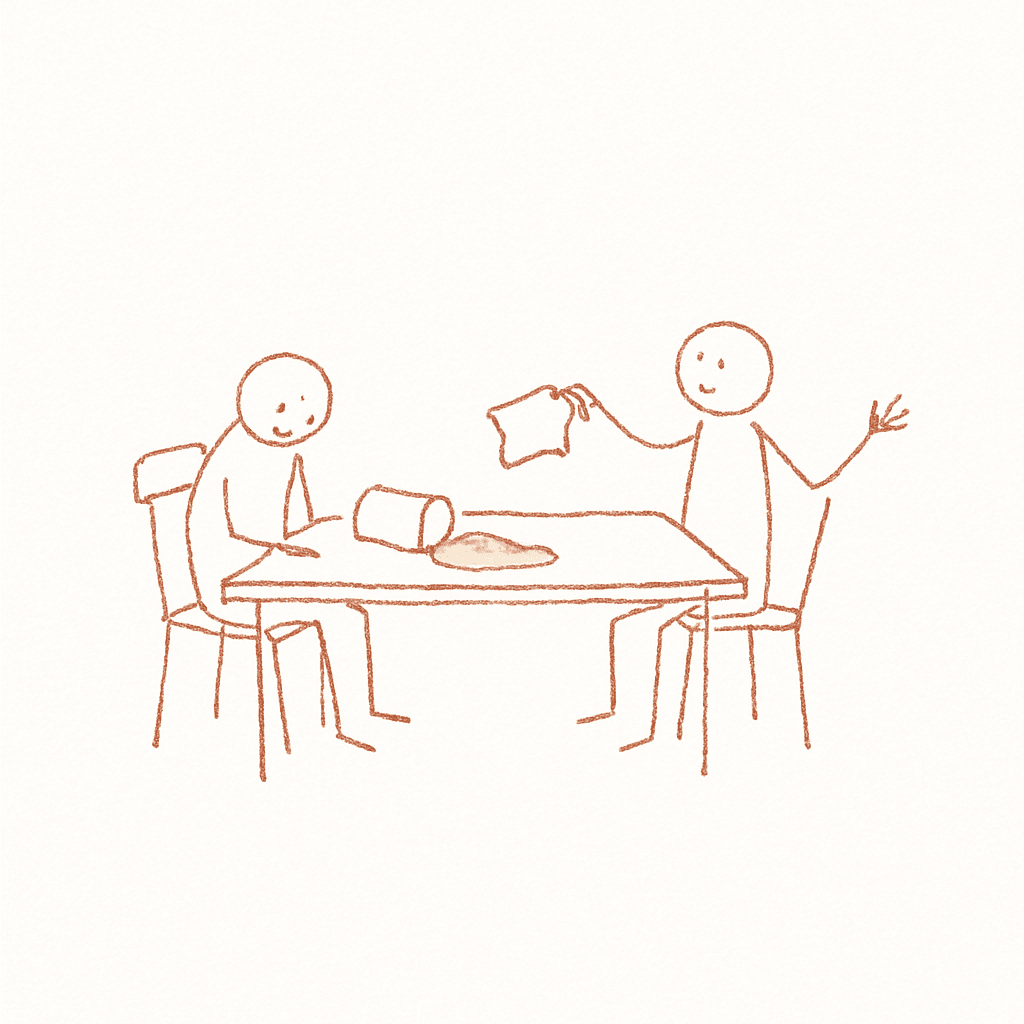
No pasa nada means “no worries” or “it's fine”. You say it when someone apologises, when something small goes wrong, or to calm someone down. Literally it's “nothing is happening”. It's understood everywhere and very common in Spain, where it's almost a national motto. Don't confuse it with de nada, which answers “thank you”.
How people really use it
Someone spills a drink.
- Camila
¡Ay, perdón! Te manché la camisa.
Oh, sorry! I got your shirt dirty.
- Andrés
No pasa nada, es vieja.
No worries, it's an old one.
Running late.
- Mateo
Perdón, llegué quince minutos tarde. Había tráfico.
Sorry, I'm fifteen minutes late. There was traffic.
- Lucía
No pasa nada, yo también acabo de llegar.
It's fine, I just got here too.
Calming a nervous friend before an exam.
- Sofía
¿Y si me pongo en blanco?
What if my mind goes blank?
- Diego
No pasa nada. Respiras, lees la pregunta otra vez y sigues.
It's OK. You breathe, read the question again and keep going.
🤷 Depende del País
No pasa nada works in every country. Some places have a favourite alternative.
- 🇪🇸 Spain: Constant. No pasa nada is the default reply to any apology.
- 🇲🇽 Mexico: No pasa nada, or no te preocupes (“don't worry”). Also está bien.
- 🇨🇴 Colombia: Tranquilo / tranquila (“relax”) or no pasa nada.
- 🇦🇷 Argentina: No pasa nada, or todo bien (“all good”), which we say all day.
Register and sound
Register. Neutral. Fine with friends, coworkers and strangers. With a client, no se preocupe (formal “don't worry”) is more polished.
Sounds like. no-PAH-sah-NAH-dah. In fast speech it runs together: “nopasanada”.
Questions people ask
What is the difference between no pasa nada and de nada?
De nada answers “thank you” (“you're welcome”). No pasa nada answers “sorry” (“no worries”). Mixing them up is one of the most common learner slips.
Can no pasa nada mean “nothing is happening”?
Yes, literally: aquí nunca pasa nada means “nothing ever happens here”. Context tells you which one you're hearing.
Is no pasa nada the same as no problem?
Very close. No hay problema (“no problem”) also exists, and both answer an apology. No pasa nada sounds a little warmer.
How good is your Spanish, really? Two minutes, real audio, and a level at the end.
In this cluster
- All Spanish phrases
- Free Spanish Dialogues: 6 Everyday Conversations
- Spanish Conversation Questions: 30 With Natural Answers
- Igualmente (Likewise / You too / Same to you)
- Ni modo (Oh well / Too bad / Nothing to be done (Mexico))
- ¿Qué tal? (How's it going? / How was…?)