

¿Qué pasa?
¿Qué pasa? means “what's happening?” or “what's going on?”, and with a pronoun, ¿qué te pasa?, “what's wrong?”. Literally it's “what passes?”. It's neutral and understood everywhere. In Spain it's also a casual “what's up?” greeting; in Latin America people greet with ¿qué tal? or ¿qué onda? instead.

Where you'll hear it
Sofía
¿Qué pasa allá afuera? Hay mucho ruido.
What's going on out there? It's really noisy.
Andrés
Nada grave. Están cerrando la calle para un desfile.
Nothing serious. They're closing the street for a parade.

How it shows up
Not the ¿Qué pasa? you were looking for?
Pasa on its own means “come in”: ¡Pasa, pasa! at the door. ¿Qué pasó? asks “what happened?”. And no pasa nada turns it into “no worries”, literally “nothing is happening”.
Register and sound
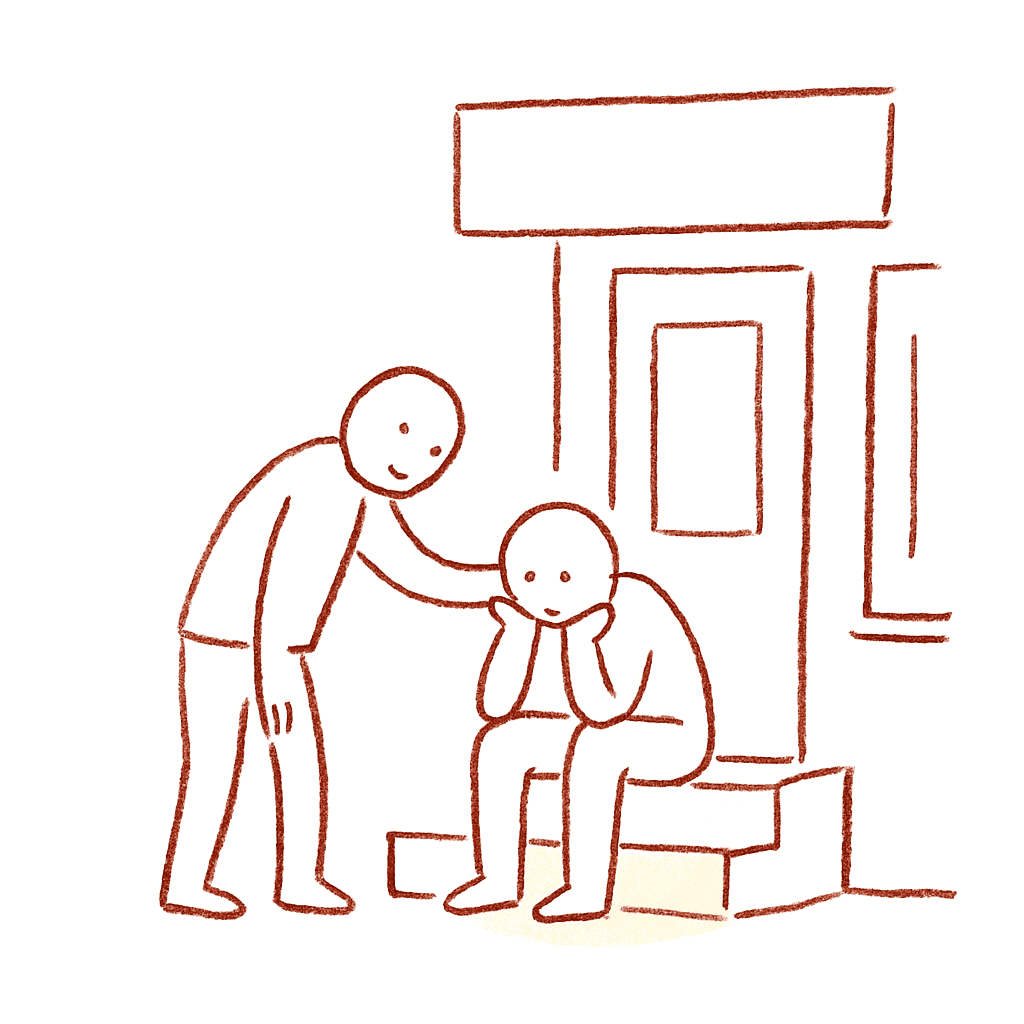
Neutral as a question: fine with anyone, including your boss. ¿Qué te pasa? depends on tone: gentle, it's “are you OK?”; sharp, it's “what's your problem?”.
keh PAH-sah, stress on PA.
🤷 Depende del País
¿Qué pasa? as “what's happening?” works everywhere. As a greeting, it belongs to Spain.
Spain
Also a casual greeting among friends: ¿qué pasa? = “what's up?”.
Mexico
A real question, “what's going on?”. To greet friends: ¿qué onda?
Colombia
A real question too. The greeting is ¿qué más? or ¿quiubo?
Dominican Republic
The greeting is ¿qué lo que?
Argentina
A real question. To greet, we say ¿todo bien?
Questions people ask
How do you answer ¿qué pasa?
If it's a real question, say what's happening, or nada (“nothing”). If a Spaniard greets you with it, answer as you would “what's up?”: nada, aquí, or bien, ¿y tú?
What does ¿qué te pasa? mean?
“What's wrong (with you)?”. Said kindly, it's “are you OK?”; snapped, it's “what's your problem?”. Tone decides.
What is the difference between qué pasa and qué tal?
¿Qué tal? is a greeting, “how's it going?”. ¿Qué pasa? asks what's happening. Only in Spain does qué pasa double as a greeting.
What is the difference between qué pasa and qué pasó?
¿Qué pasa? is the present: “what's happening (right now)?”. ¿Qué pasó? is the past: “what happened?”, after a crash, a shout or a long silence.
Is ¿qué pasa? rude?
No, it's neutral. Only ¿qué te pasa? in a sharp tone sounds confrontational.
